Illinois Crop Update | June 19, 2026
Emily Hansen – Commercial Agriculture Educator
LaSalle County
Soil Conditions: Severely Wet (ground is saturated, standing water is abundant, flooding may be present)
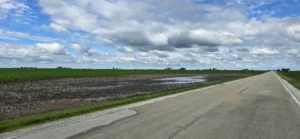
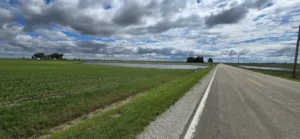
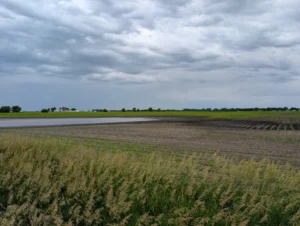
After the multiple severe storms over the past week in LaSalle County, field conditions are severely wet. There is a wide range of conditions, with well-drained fields looking fantastic and healthy. These are the exception, though. There are far more fields with large areas of standing water that have been present for over a week. These areas with significant ponding are a near total loss. Some fields that are slightly better drained have significantly stunted plants, with soy looking much worse than corn of similar growth stages. There is more rain in the forecast for this weekend and next week, so I do not anticipate these fields having much chance to dry out. Additionally, there are areas of LaSalle County where crops have been damaged by the strong winds from recent storms, with corn fields taking the brunt of this with many plants leveled and under water. Areas around Streator have suffered significant damage after an EF-3 tornado touched down last week as well. Overall, crop conditions are far from ideal in LaSalle County right now.
Russ Higgins – Commercial Agriculture Educator
Grundy County
Soil Conditions: Moderately Wet (soil is damp, standing water may be present in low areas, water bodies are full)
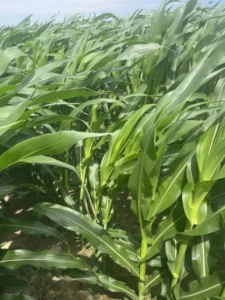
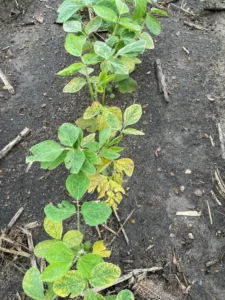
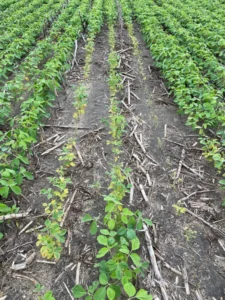
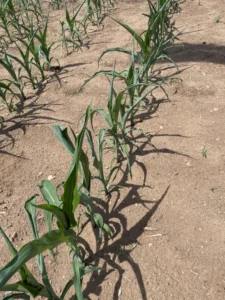
When I left Illinois for a brief vacation in the first week of June, the Northeast Region was dealing with impending drought concerns (note wrapped corn from June 4th). Twelve days and 5+ inches of precipitation for many acres, an entirely new set of concerns for the 2026 crop. New concerns relate to saturated soils, erosion and crop damage caused by moving surface water and wind, and the lack of opportunity to apply post herbicides while weeds are in the optimum treatment window. Even when standing water dissipates, a saturated soil very quickly limits oxygen availability to a growing crop. An oversimplified way of describing the effects of a saturated soil is that the lack of soil oxygen available to the roots can reduce or stop plant functions. This can include transpiration, nutrient uptake, and water uptake. Extended saturated soil can cause visible stunting and even plant death, resulting in varying degrees of reduced final yield. In addition to struggling crops, persistent precipitation has prevented many post-herbicide applications from taking place. A few weeds, especially Waterhemp, easily have exceeded the recommended maximum weed size for control of most herbicide. Soy on well drained soils are starting to enter their reproductive stage (flowering). We are near halfway through the growing season and have experienced the environmental conditions of excessively cool, hot, dry, and wet; What’s next?
Talon Becker – Commercial Agriculture Specialist
Iroquois County
Soil Conditions: Moderately Wet (soil is damp, standing water may be present in low areas, water bodies are full)
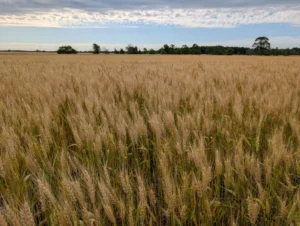
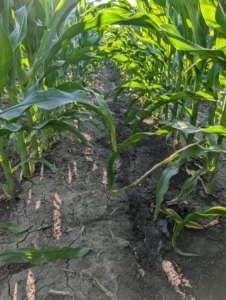
Although June started dry, the past 10 days have brought several inches of rain to most of the east central Illinois region. Soil conditions in Iroquois County as I conducted my survey on Tuesday (6/16) morning were already on the wet side, with standing water prevalent, particularly in the southwest portion of the county. And since then, over the past couple days the latest round of storms has brought another inch of rain or more. Most fields on higher ground with good drainage still looked healthy at the time of my survey, but unfortunately, there were some fields with areas where crop will be lost, either from lack of oxygen to the root or subsequent disease issues, and timely weed control operations will be difficult. Most soybeans in the county appeared to be in the V3-V5 range, but I didn’t see any flowers poking out quite yet. Corn fields were generally somewhere near V5-V7, with some early-planted fields starting to grow more rapidly as they approach V10. The few wheat fields I visited were somewhere in the late milk to early dough stages (Feekes 11.1-11.2).
Reagen Tibbs – Commercial Agriculture Educator
Logan County
Soil Conditions: Moderately Wet (soil is damp, standing water may be present in low areas, water bodies are full)
Another week, and yet another round of storms and rain across Logan County. Storms on June 17 brought anywhere from 2 to 3 inches of rain. While ditches and low-lying areas are full of water, there does not appear to be any significant crop damage from the high winds that accompanied the rain. This latest round, combined with roughly half an inch over the weekend, will surely add some extra “gas” in the tank for crop growth as temperatures and conditions appear to remain favorable over the coming days.
Doug Gucker – Local Food Systems and Small Farms Educator
Dewitt, Macon, and Piatt County
Soil Conditions: Moderately Wet (soil is damp, standing water may be present in low areas, water bodies are full)
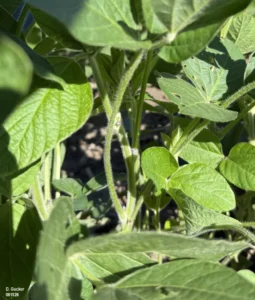
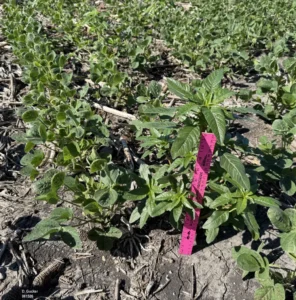
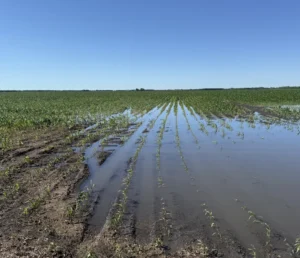
Crops are growing well. Soybeans vary from growth stages V3 to R1. Corn fields vary from V4 to V12. Earlier in the week, farmers and custom applicators were trying to finish up post-emergent herbicide applications ahead of the forecasted rains and storms. Unfortunately, still seeing a few farmers attempting to control tall waterhemp that exceeds the 4-inch recommended height limit for effective control.
Nick Seiter – Extension Field Crops Entomologist
It has been unusually quiet so far this year for insect reports. Late last week, I received a report of spider mite activity in soybean in south-central Illinois near Macedonia. Most of the state received a healthy (or even unhealthy) dose of rain at least once or twice in the last week – that will do more to eliminate spider mites as a threat than even the best miticides available. Cooler temperatures will also help. If you are in an area that remains hot and dry and have spider mites, evaluate the potential for continued growth in the population based on the weather forecast and the extent of current injury to make a control decision.
I’ve also received a report that grape colaspis are active again in at least a limited area near Mt. Auburn where they have been a problem in the past. Affected plants will exhibit nutrient deficiency symptoms, especially purpling of the lower leaves and often concentrated on higher/better drained portions of the fields. Digging up the plants will reveal the larvae, which resemble tiny white grubs. By this point, affected plants will be noticeably stunted relative to surrounding, healthy plants, and the larvae may be close to finishing their development and emerging as adults. There is no effective rescue treatment for this pest in corn.
We will again be distributing yellow sticky traps to anyone who wishes to participate in our regional corn rootworm monitoring network. If that applies to you, send me an email (nseiter@illinois.edu) with “rootworm monitoring” in the subject heading.
Giovani Preza Fontes – Extension Field Crops Specialist
Edgar County
Soil Conditions: Severely Wet (ground is saturated, standing water is abundant, flooding may be present)
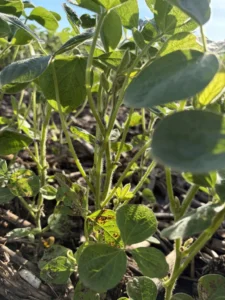
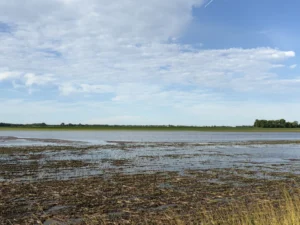
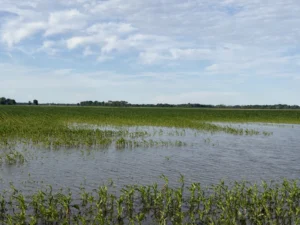
June has been wetter than normal across Edgar County, with 5-6 inches of rain so far, including the 1.5-2.3 inches that fell yesterday. As expected, soils were saturated, and several fields in the northern half of the county had standing water as of my survey on Thursday morning. In some cases, water was limited to small, low-lying areas or field edges in some fields, but in other fields showed large areas of standing water.
I also saw a wide range in terms of crop growth and development. Most advanced fields had corn at the V10-V12 stage (nearly chest high) and soybean beginning to bloom with 5-6 trifoliolates. Roughly 20% of the fields were likely planted in late May or early June, with corn at V2-V4 and soybean at V1-V2. Fields in between these groups generally had corn at V6-V7 and soybean at V3-V5.
Dane Hunter – Commercial Agricultural Specialist
Marion County
Soil Conditions: Mildly Wet (soil is wetter than normal, local vegetation is healthy)
There is a pocket south of Interstate 70, mostly through Clinton, Marion, and Fayette counties that has received several more inches of rain over the last 60 days which has impeded planting compared to the rest of the state.
Corn planted in early April looks good and is about head height and around V10. Some of the latest corn plantings/replants are just about V2. Growers that didn’t hit that first window have had to struggle with replant decisions.
Some beans also got planted in the first half of April and are nearing canopy close if drilled. However, many beans were not planted until late May/early June with some fields planted in the last week or that have yet to be planted.
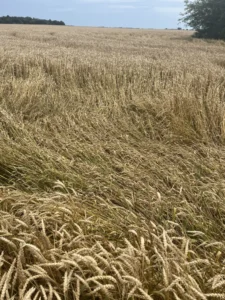
Wheat matured a little early this season, and harvesting could have begun the second week of June if rain and replants had allowed. As of the Illinois Wheat Association’s annual wheat tour in May, little lodging was reported, but the repeated storms of the last few weeks have caused lodging in some fields. The repeated rains on otherwise mature wheat have also raised concerns of quality degradation.
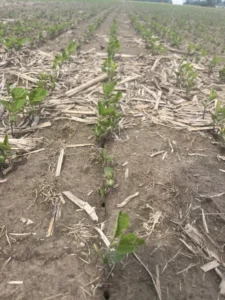
Last weekend a few combines got rolling but were stopped by showers on Tuesday 6/16, and forecasts show more rain due this week. I saw a few planters trying to squeeze in double crop beans on 6/17 before the next round of rain, hoping either that the straw isn’t too wet to cut through or their row cleaners can clear a path. Hopefully the can get back to cutting by the Juneteenth weekend.