Illinois Crop Update | July 31, 2026
Russ Higgins – Commercial Agriculture Educator
Grundy County
Soil Conditions: Near Normal
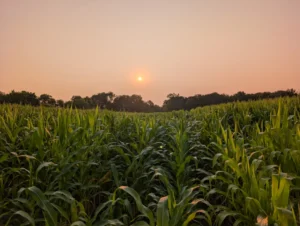
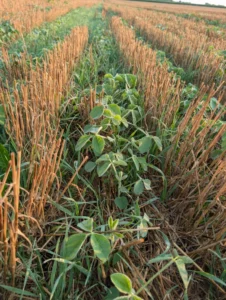
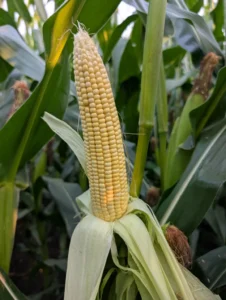
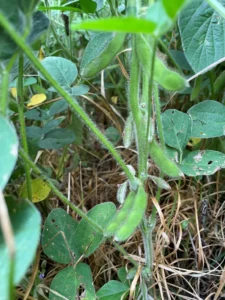
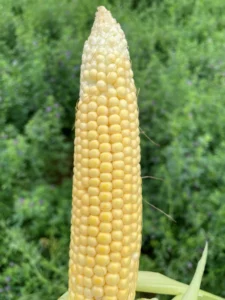
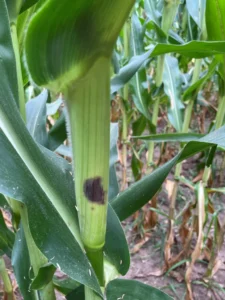
This past week saw hail, substantial rain, and missed opportunities for needed precipitation in varying fields across the northeast region of Illinois. Corn has reached R3 or the milk stage in the field I have been scouting this summer. At this stage the kernel no longer adds new cells to the kernel endosperm but fills the existing cells with liquid starch. If punctured the liquid, or “milk”, will spray or shoot out of the kernel. Foliar disease pressure in this field continues to be low, but I have noted very sporadic purplish lesions in leaf midribs and on corn stalks. This is symptomatic of the fungal disease Physoderma brown spot. Especially on lighter soils or areas where significant nitrogen loss occurred, likely due in part to extreme rainfall, considerable remobilization of carbohydrates is taking place as corn plants cannibalize lower leaves to meet their nutritional needs of ear development. Soy has reached R4 or full pod stage, the beginning of a critical stress response period for the soy plant. New flower growth slows and plants lose their ability to remake new flowers and pods. Similar to the corn crop, disease and insect pressure currently are low in the 2026 soy fields I have visited.
Doug Gucker – Local Food Systems and Small Farms Educator
Dewitt, Macon, and Piatt County
Soil Conditions: Mildly Dry (soil is drier than normal, plant growth may have slowed)
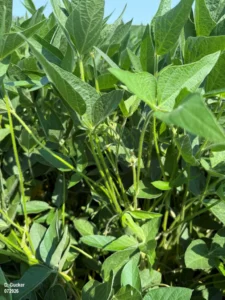
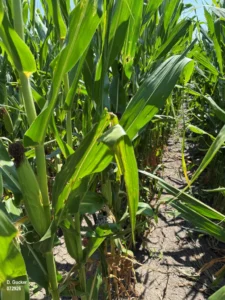
Crops are looking good. Soybean fields are not showing any signs of disease symptoms in the upper soybean canopy. Corn is advancing to the dough stage in early-planted fields. The majority of central and eastern portions of Illinois have had below normal rainfall for the first 29 days of July, as evidenced by the brown grass in pastures, lawns, and roadsides.
Talon Becker – Commercial Agriculture Specialist
Vermilion County
Soil Conditions: Mildly Dry (soil is drier than normal, plant growth may have slowed)
Corn and soybeans are progressing well in northern Vermilion County, as full-season crops are entering key grain fill stages. Impacts from wet weather early in the season can still be seen in low-lying fields, with uneven growth stage and canopy where the crop survived. Conditions have been a bit dryer in the region over the past several weeks, and surface soils are starting to crack. That said, crops do not appear to be experiencing much stress at this point, as they are likely able to access moisture deeper in the soil profile.
Most full-season soybean fields were somewhere in the pod development stages (R3-R4), and the few double-crop soybean fields I found were in the V2-V3 range. Disease and insect pressure still appeared to be low in most soybeans, but weeds, primarily waterhemp, were a different story in a handful of fields. Corn generally ranged from R1 (silking) to R3 (milk). I found a couple fields with some mild aphid pressure, and foliar symptoms of nitrogen deficiency could be found in the lower canopy in those areas affected by the early-season moisture and subsequent soil conditions. Foliar disease symptoms can also be found in these areas where plants are stressed, but healthy corn still looks relatively clean of foliar diseases.