Illinois Crop Update | July 3, 2026
Steve Brand – Commercial Agriculture Specialist
Dekalb County
Soil Conditions: Mildly Wet (soil is wetter than normal, local vegetation is healthy)
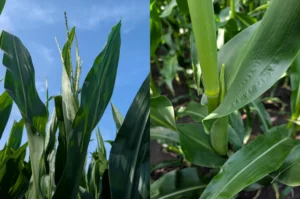
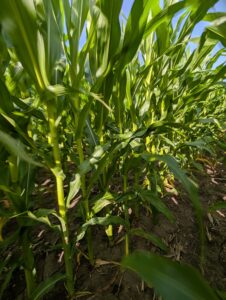
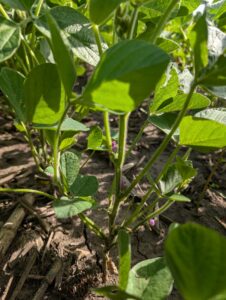
The heat wave is upon us this week bringing 90+ degree temperatures with very high humidity. After a few weeks of cooler weather and lots of precipitation, the corn and soybeans that were not waterlogged are thriving, and have jumped multiple growth stages since last week. I scouted corn fields anywhere between V5/V6 up to V10 with rapid growth from all the heat units being added into the environment. Soybeans are a bit more spaced out depending on planting date, with some fields as far along as R2 upper node flowering.
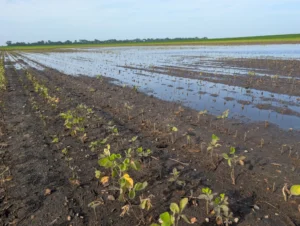
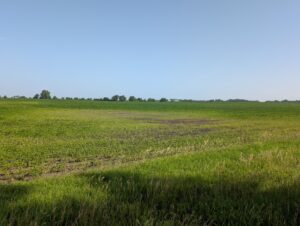
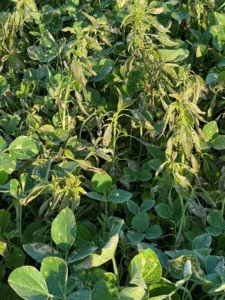
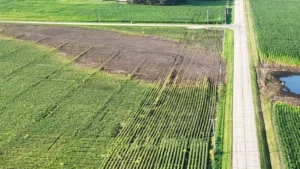
Water damage from previous storms is becoming increasingly evident where it was sitting for multiple days, drowning out both corn and soybeans, with many fields showing bare ground from a low spot leading to islands of complete crop loss. Much of this was heavily dependent on who received heavy and damaging rain and winds.
I would advise to be vigilant about your scouting for disease. I have not seen tar spot or Northern Corn Leaf Blight (NCLB) yet, but a colleague in Morris, Illinois has found large NCLB lesions in fields. After 2 weeks of ideal tar spot weather, despite not seeing any today, I have concerns we may see early outbreaks this season, especially compared to last season and the early drought we experienced in northern Illinois.
That’s all for this week, I’ll be back next week with another update!
Russ Higgins – Commercial Agriculture Educator
Grundy County
Soil Conditions: Near Normal
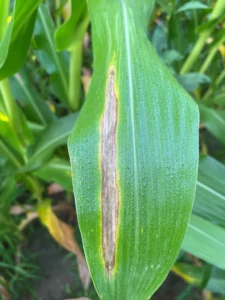
In a recent report I stated that warmer weather would benefit the 2026 crop, perhaps in the future I should qualify my term of “warmer weather”. A week of 90 degree plus days in Northeastern Illinois has allowed farmers and agribusiness the opportunity to play catch-up applying post herbicides. Last week you could not travel a rural road without meeting a sprayer. Most fields have weed populations that have easily exceeded weed size management recommendations, and most have drowned out areas that will likely germinate later season weeds. Fields this year are unlikely to have “perfect” weed control. Growers are encouraged to evaluate post herbicide applications and start scouting for leaf diseases in corn. Tar spot symptoms have been reported in the state; one tool that can be utilized to see if a crop disease has been reported in your area is visiting the Crop Lookout website. Crop Lookout is a real-time, interactive map that highlights emerging field crop issues across the United States and Canada. Updated throughout the growing season by university Extension specialists and research partners, the tool visualizes reports of diseases, pests, and other agronomic challenges as they develop. Northern corn leaf blight lesions have been found in Grundy County as the crop is near the tassel (VT) stage.
To report suspected tar spot or other crop diseases in Illinois, send an email with photos to our Field Crop Pathologist, Boris Camiletti (bxc@illinois.edu).
Doug Gucker – Local Food Systems and Small Farms Educator
Dewitt, Macon, and Piatt County
Soil Conditions: Mildly Wet (soil is wetter than normal, local vegetation is healthy)
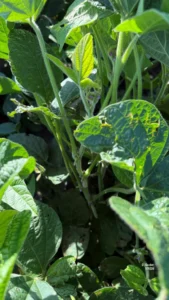
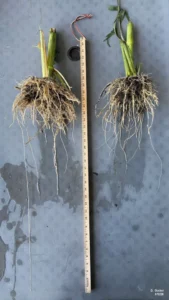
Crops are growing well with soybeans in the R2 to R3 stages, and corn is in VT to R1 stages. So far, not seeing any leaf diseases in corn or soybeans. Japanese beetles are being seen feeding on tender vegetation, but are not yet evident in fields. I have not found any root feeding in corn, and root systems in fields planted under good conditions are looking healthy and strong.
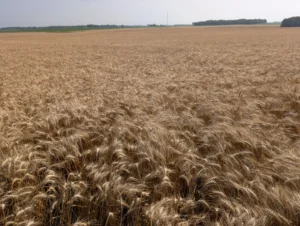
The wheat harvest is quickly wrapping up in the wetter areas of the region, with double-crop planting following soon after.
Post-emergent soybean herbicide applications delayed by wet field conditions are wrapping up, with the target weed species larger than desired.
Talon Becker – Commercial Agriculture Specialist
Vermilion County
Soil Conditions: Moderately Wet (soil is damp, standing water may be present in low areas, water bodies are full)
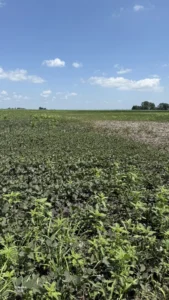
Some hot summer weather this week and a break from the rain has helped dry many fields enough for spraying and other field work to resume in southern Vermilion County. While there were still some low lying or poorly drained areas of fields with standing water as of my survey on Tuesday morning, most of the water had receded. Time will tell over the next few weeks how well the crop that remains will recover. Much of the corn in that part of the county is still in vegetative growth stages, generally ranging from V8-V14. I did find a couple fields that had started to show tassels, although no silk emergence or anther exsertion quite yet. Most soybean fields visited had reached early flowering (R1), at least in parts of the field. The most advanced soybeans I found were beginning to form pods, entering early R3. Wheat harvest has started in that part of the county, but most wheat fields were still standing as of Tuesday morning.