Illinois Crop Update | June 26, 2026
Steve Brand – Commercial Agronomy Specialist
DeKalb County
Soil Conditions: Severely Wet (ground is saturated, standing water is abundant, flooding may be present)
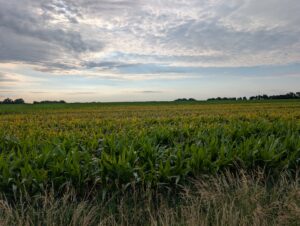
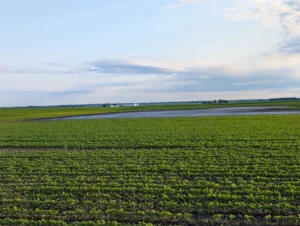
What a turn of events over the last couple of weeks from the start of the season. Heavy rains, hail, strong winds, and even tornadoes have brought us out of the early drought and well past into extremely saturated soils. Areas hit hard by storms have significant standing water, and established crops have begun to show signs of stress and are being drowned out in low areas with long standing water. Those who avoided the flooding are enjoying great moisture, and we are seeing significant growth across both corn and soybeans.
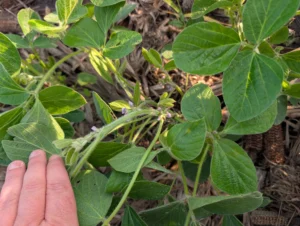
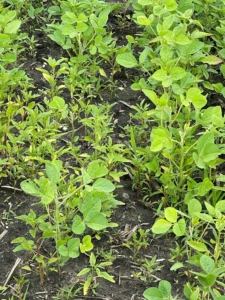
Early in the season there was staggered emergence, and lots of variability within fields and that largely faded out as crops even out with ample water. Field to field si still showing high variability and that is mostly due to staggered planting with rain events in April and early May. I’ve seen soybean fields anywhere from V2, with some fields approaching R1 flowering in the next week or so. Fields look healthy as far as the crops are concerned (outside of aforementioned flooding and water logging damage). With delayed emergence and plenty of water recently, missed post applications could become a problem quickly as weed pressure is taking off. I have not seen much if any disease in soybeans yet. The dry conditions early on prevented a lot of soil borne diseases from taking hold such as pythium or phytophthora. Once soybeans start to canopy, we will need to remain vigilant for late season disease such as white mold and SDS. Overall soybeans look good all things considered.
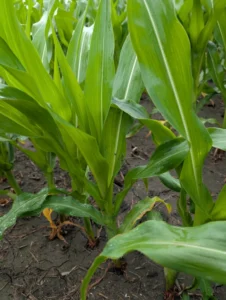
Corn has started to jump growth stages quickly. Other than low spots and fields with extreme flooding, much like soybeans corns is looking great. Most fields I visited were in the V5 growth stage, with some a little further west near Amboy at V6 and growing quickly. One thing to really look out for in corn will be disease in the coming weeks. Many foliar fungal diseases (Tarspot, Gray Leaf Spot, and Northern Corn Leaf Spot) thrive in cooler, wet conditions with extended leaf wetness. These are the exact conditions we are seeing currently before an end of week warm up. Many of these diseases can infect plants but won’t show symptoms until 10-14 days after the initial infection. I would highly recommend scouting vigilantly starting next week to catch any early signs of disease so you can act accordingly. Early infections of tarspot can wipe out fields of corn. So, it’s very important to be on top of.
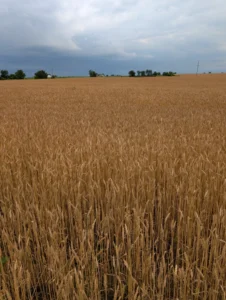
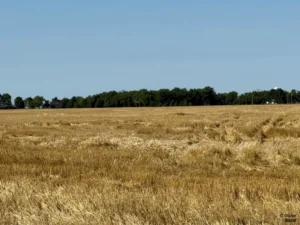
Ill touch on wheat quickly. Fields are drying down nicely, many fields are close to being ready to harvest, and appear healthy and disease-free from what I have scouted. If we catch some breaks from the rain, early July could be in play for harvest.
For help identifying windows when weather conditions are optimal for diseases to replicate, using the Crop Protection Network crop risk tool can be very helpful. This site has a multitude of helpful tools, and I will link it below.
https://cropprotectionnetwork.org/tools
I’ll be back next week with another update.
Russ Higgins – Commercial Agriculture Educator
Grundy County
Soil Conditions: Moderately Wet (soil is damp, standing water may be present in low areas, water bodies are full)
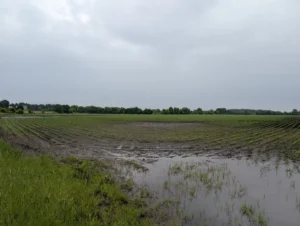
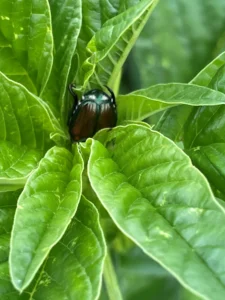
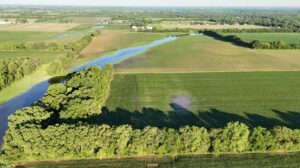
Another week with precipitation, in many areas ground sprayers have been unable to operate since June 7th. Many fields that are inherently poorly drained are ponded, and both corn and soy are suffering. Farmers are facing the challenge of post applications of herbicide for corn and soy, and in some cases nitrogen for the corn crop. Warmer and dryer weather is desperately needed for the crops in the area. Most soy in the area not stressed by saturated soil has reached R2 (full flower), corn has reached V11. Waterhemp has reached 18 to 24 inches in untreated fields. Area alfalfa fields are flowering and Japanese Beetle have emerged in Northeast Illinois.
Meagan Diss – Commercial Agronomy Specialist
Peoria County
Soil Conditions: Moderately Wet (soil is damp, standing water may be present in low areas, water bodies are full)
Peoria County has received around 4.5 inches of rain over the past two weeks, with limited opportunities for soils to dry between events. Fields with good drainage are doing well overall, but poorly drained areas are showing ponding. This week has provided a needed window for some dry down, and I haven’t seen any widespread crop damage from wind. Looking ahead, another chance of moisture followed by higher temperatures should support crop growth but may increase disease concerns.
Reagen Tibbs – Commercial Agriculture Educator
Logan County
Soil Conditions: Moderately Wet (soil is damp, standing water may be present in low areas, water bodies are full)
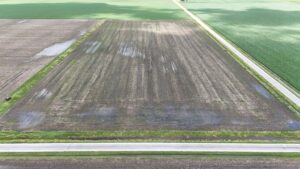
Last week brought another 3 to 4 inches of rain across Logan County. This has helped alleviate concerns about drought or dry conditions in the short term. Despite the high winds from some of the storm systems last week, there appear to be very few signs of wind damage to crops. Nearly all of the corn is at knee-height or higher, with some of the earliest-planted corn at V9-V10. Soybeans across the county also look healthy, with the earliest-planted fields in the V5 stage.
Doug Gucker – Local Food Systems and Small Farms Educator
Dewitt, Macon, and Piatt County
Soil Conditions: Moderately Wet (soil is damp, standing water may be present in low areas, water bodies are full)
Crops are generally doing quite well, although severe storms on June 17 did bring high winds and hail to portions of the 3-county area. The majority of the corn is in the V8 to V12 stage, and soybean fields are in the R1 stage. Presently, seeing only minor Gray Leaf Spot lesions in a few fields, and no Tar Spot so far. Japanese beetles are emerging. Low areas in fields are showing ponding and water-damaged plants. There will be cornfields tasseling by July 4.
Talon Becker – Commercial Agronomy Specialist
Champaign County
Soil Conditions: Moderately Wet (soil is damp, standing water may be present in low areas, water bodies are full)
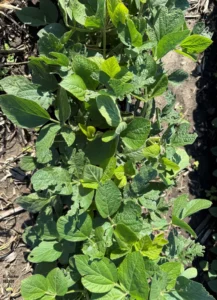
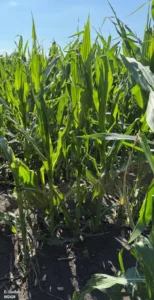
Field conditions are still wet in northern Champaign County, with 2.5-3 inches of rain falling across most of that half of the county since June 17. A large proportion of fields I saw during my survey on Wednesday (6/24) morning had at least some low-lying and/or poorly drained areas with stunted, dying, or dead crop from the inundation those plants have experienced over the past couple of weeks. For the most part, these areas were relatively isolated in fields, and standing water is no longer present. However, I did see several fields with large areas of dead or stunted crop, some still with standing water. Relief from the wet conditions may still be a few days away, with more rain in the forecast for the remainder of this week. But drier conditions and warmer temperatures in next week’s forecast offer some hope.
Because of the generally wet conditions we had in this part of the state so far this season, crop progress is variable both across the area and across the field, in many cases. Healthy areas of corn fields are generally somewhere around V8, with some fields getting closer to the V10-V11 growth stages. Most soybean fields are still in vegetative growth stages, but I did find a handful of fields that have started to flower (R1) and a couple fields getting closer to full flower (R2). Wheat fields I checked were nearing full senescence with grain in the ‘ripening’ stage (Feekes 11.3) and could likely be harvested next week if the hot and dry forecast holds. As can be expected, weed control was variable across the area, with some fields presumably missing their timely post-emergence application windows due to the wet conditions. That said, I saw several sprayers on the roads while doing my survey, so at least some of those acres may get covered today or tomorrow, if the rain holds off long enough.