Illinois Crop Update | May 8, 2026
Kathryn Seebruck – Commercial Agriculture Educator
Stephenson County
Soil Conditions: Mildly Wet (soil is wetter than normal, local vegetation is healthy)
Field work and planting have been ongoing once fields dried enough following the significant rainfall events experienced in the area in mid-April. Although two weeks ago we experienced a number of uncharacteristically warm days, the weather this week continues to vary as some days have been relatively warm, but many nights have been relatively cool, with some even falling below freezing. Those that have recently planted may see slower emergence due to the consistently colder nighttime temperatures. However, the next week should bring temperate weather to facilitate further planting progress and good conditions for crop emergence across the area.
Steve Brand– Commercial Agriculture Specialist
DeKalb County
Soil Condition: Moderately Wet (soil is damp, standing water may be present in low areas, water bodies are full)
Hello and welcome back to another year of crop scouting reports! For those who don’t know me, I am Steve Brand, a commercial agronomy specialist covering the northern region of Illinois through university of Illinois Extension. To start our crop scouting journey this year, we have had quite a difference from the start of 2025 in that we are not currently in a drought! The problem with that is to get this this point we have had excessive rain across all of northern Illinois through March and April, with some cooler temperatures to boot. Fields are currently still wet, with little corn and soybeans in the ground for the end of the first week in May.
Driving through Lake, McHenry and Dekalb counties this week showed little field activity, with few fields planted overall. Recent storms followed by cool and frosty nights have led to very poor drying conditions. As we enter the weekend and into next week, I expect fields to dry out and for the big planting push for corn and beans. A bit further south along the I-80 corridor, I saw fields being active field tillage, pre-emergent herbicide applications, and general field maintenance in preparation for planting, so they are a bit further ahead of the far northern reaches of the state.
With the large amount of rain accumulated in April, we also saw plenty of localized flooding along the Fox and Rock rivers, with areas seeing 2-3 foot water level increases. Those levels are close to returning to normal as I write this. April obviously brought plenty of severe weather to induce the flooding. Illinois from January 1st through April 30th has experienced 119 tornadoes across the state, which is more than double the number of the next closest state. I for one, am hopeful these weather patterns have past and we can move forward into the summer with some calmer weather.
I’ll see you all next week with another report and I am excited to see fields planted through the weekend and really get this season underway.
Russ Higgins – Commercial Agriculture Educator
Grundy County
Soil Conditions: Mildly Wet (soil is wetter than normal, local vegetation is healthy)
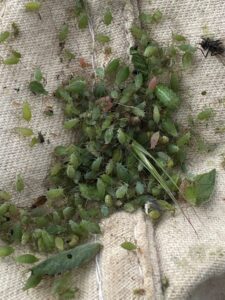
I’m looking forward to another growing season and crop reporting in Northeast Illinois. April and May precipitation has slowed planting progress in comparison to other regions of Illinois. I’m estimating almost as much seed is still in the bag when compared to seed in the ground. On suitable days for planting, reports received suggest local farmers actively planted both soy and corn. The practice of planting soy ahead of corn acres has been adopted by many. Whether corn or soy, I was impressed by the acreage planted in a limited time frame. Despite planting date, low accumulations of GDD’s have slowed crop emergence. With limited emerged crops we will highlight insect pests found in alfalfa. While sweeping alfalfa we netted alfalfa weevil larvae, aphids and bean leaf beetle. We will continue to monitor leaf feeding in the alfalfa crop to determine if a management threshold is reached.
Reagan Tibbs – Commercial Agriculture Educator
Logan County
Soil Conditions: Mildly Wet (soil is wetter than normal, local vegetation is healthy)
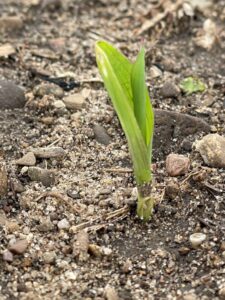
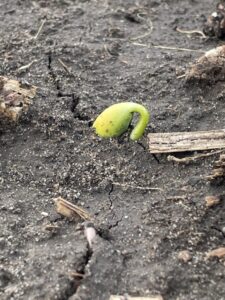
Crop growth across Logan County remains steady, despite heavy rains and cold nighttime temperatures. Most fields that have been planted have begun to emerge, with a few fields still yet to be planted. There do not seem to be many spots that will require replanting due to washouts from heavy rains in late April.
Doug Gucker – Local Food Systems and Small Farms Educator
Dewitt, Macon, and Piatt County
Soil Conditions: Mildly Wet (soil is wetter than normal, local vegetation is healthy)
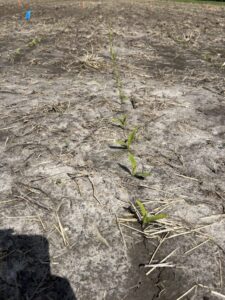
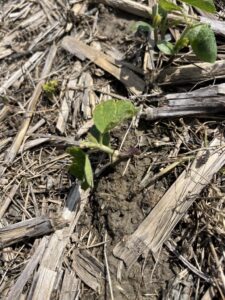
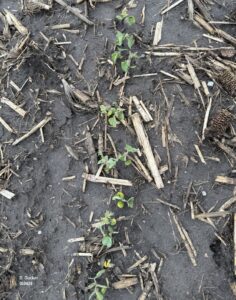
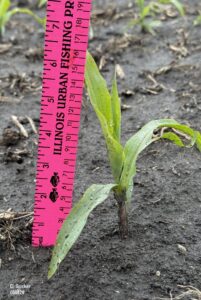
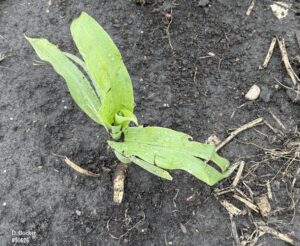
In my three county area, we are over two thirds planted but that varies from area to area depending on rainfall amounts and field drainage. All plants are showing leaf damage from one or a combination of high winds, blowing soil and severe storms. This leaf damage can be seen in the photos. With the high winds, we have experienced dust storms in select locations across the three counties.
Talon Becker – Commercial Agriculture Specialist
Champaign County
Soil Conditions: Mildly Wet (soil is wetter than normal, local vegetation is healthy)
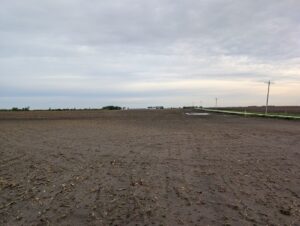
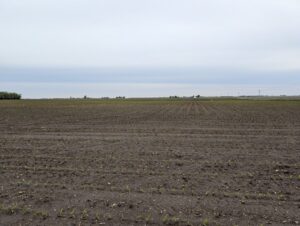
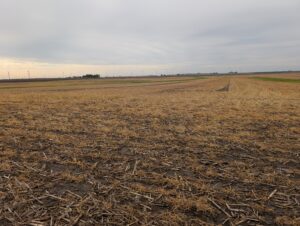
Planters were rolling over the weekend in parts of Champaign County, but rain on Monday into Tuesday has kept everyone out of the field since. Most fields I passed during my survey of the northern half of the county had been planted, but maybe only 10-15% had crop emerged. Cooler weather and relatively wet soils over the past couple weeks have made the crop slow to emerge (>2 weeks after planting) in many fields. Most soybeans are just starting to get out of the ground, while a few corn fields I saw were a bit further along, near the V2 stage. The one wheat field I found was still in the stem elongation phase, with the flag leaf visible on some of the further along plants.
Dane Hunter – Commercial Agricultural Specialist
Marion County
Soil Conditions: Near Normal
We are wet now due to recent storms but had been pretty dry and just now getting back closer to normal soil moisture and water tables.
Early to mid April saw a lot of fieldwork and the earliest corn already ankle high. Overall, still less than 25% of the crop in the ground but that’s still a lot more progress than we saw a year ago. Now the forecast looks like we are going to be wet for the next couple of weeks but at least most of the early planted crop has emerged despite the cold soils.
The wheat is done flowering and looking good after the dry winter and spring.