Illinois Crop Update | May 22, 2026
Steve Brand – Commercial Agronomy Specialist
DeKalb County
Soil Conditions: Mildly Dry (soil is drier than normal, plant growth may have slowed)
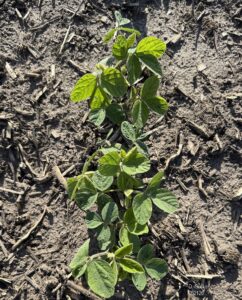
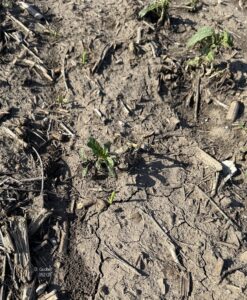
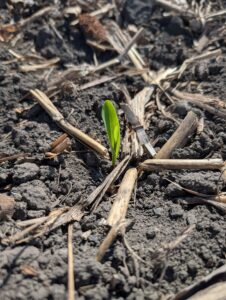
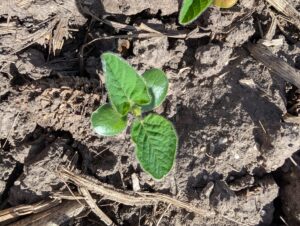
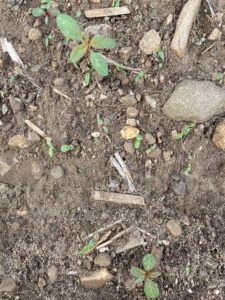
Overall, planting is close to finished across more of northern Illinois. Field work over the last 2 weeks has been non-stop, and most fields I saw were either planted or just beginning to emerge, whether that was corn or soybeans. After a wild and wet April, May has been very dry and unusually cool, with a few late spring overnight frosts. Some of the early plantings of corn and soybeans were showing some slight damage, but nothing that they wouldn’t grow out of.
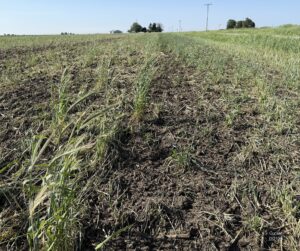
As I mentioned, May has been very dry so far, with many of the major storms going south and hitting central and southern Illinois. Parts of northern Illinois have slipped back into a very mild drought, and we should continue to monitor that as we finish with May and enter the summer months. With planting being delayed and most crops just emerging, the season is a bit behind last year. Some concerns to watch will be pressure from weeds depending on when pre-emergent herbicides were applied, but otherwise we are off and running on another season.
The coming weeks will be more eventful as crops begin to take off, and it will hopefully be a smooth and productive season!
Russ Higgins – Commercial Agriculture Educator
Grundy County
Soil Conditions: Near Normal
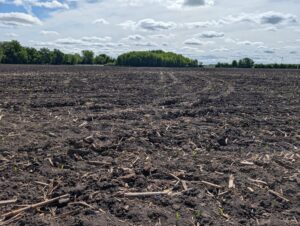
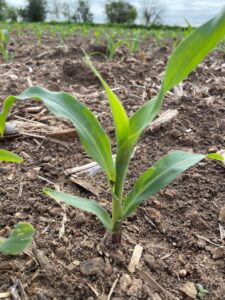
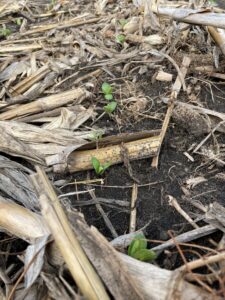
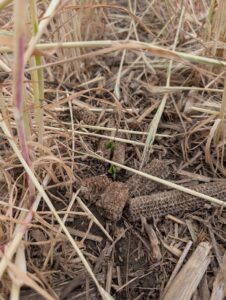
Another good week for field work in the region. Substantial progress was made in both corn and soy planting. Several eighty-degree days helped spur growth in planted crops, however I noted no-till soy fields, especially soy planted into heavy corn residue, were lagging in emergence and development, likely due to cooler soils. It is generally suggested with soybeans that cotyledons provide the needs of the plant during emergence to almost V1 (first trifoliate) stage. After V1 the photosynthesis of the vegetative plant will sustain itself. Early planted corn in the region has reached V4. Underground, the seminal root system has been joined by the nodal root system. The nodal root system of the corn plant is initiated at VE and becomes the major supplier of nutrients and water to the plant by V6.
Scouting fields at emergence and early vegetative stages is helpful in evaluating planter (and operator) performance by observing uniformity of plant stands, spacing and overall emergence. Additional notes can be taken on early season diseases, compaction or poorly drained areas in a field, and early season performance of soil-applied herbicides.
Soft red winter wheat has reached anthesis, or flowering. For those considering a fungicide application to control head scab (Fusarium head blight) this is a recommended window of application. In forage crops, alfalfa has started to flower, an indicator for harvest consideration (depending upon your goal of quality or quantity) when a favorable weather window permits.
Meagan Diss – Commercial Agronomy Specialist
Warren County
Soil Conditions: Mildly Wet (soil is wetter than normal, local vegetation is healthy)
We are seeing a variety of growth throughout the county due to the scattered planting dates. We still have some fields left to plant but are seeing quite a few more fields emerging this week. For us it’s been a rather wet week with three days of rain in the past week and cooler temperatures swinging in the later part of this week. Pastures are looking healthy throughout the county as well.
Talon Becker – Commercial Agronomy Specialist
Ford County
Soil Conditions: Near Normal
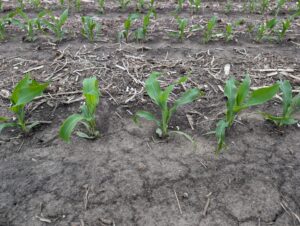
Much of the crop in Ford County is in the ground, and the remaining fields should get planted sometime this week or early next. As I drove through the county for my survey on Wednesday morning, conditions were starting to dry up just enough for traffic in many fields, although some fields in the southern part of the county were still a bit on the wet side. About half of the fields I drove by and visited had emerged crop, with many of those still in that VE stage. I found a few fields of early planted corn around V4-V5 and soybeans around V2-V3. The more advanced corn was showing some striping (interveinal chlorosis) in parts of a couple fields, potentially from nutrient deficiencies caused by cool temps and the subsequent lack of root growth and slow mineralization soil organic matter. As conditions warm and root systems continue to develop, previous years have shown these symptoms subside with sufficient sulfur supplied by soils. Warmer temps and relatively dry conditions in the short-term forecast are welcomed and will help the crop catch up a bit from the cool May we’ve had so far.
Doug Gucker – Local Food Systems and Small Farms Educator
Dewitt, Macon, and Piatt County
Soil Conditions: Mildly Wet (soil is wetter than normal, local vegetation is healthy)
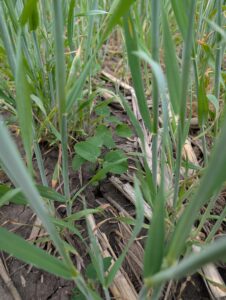
Planting is over 90% completed in my 3-county area. The rains of the past week brought anywhere from nearly 3″ of rain in the southern portions to just over 1/2″ in the NE portion. Generally, the emerged crops look good, but areas of some fields are showing uneven emergence due to soil crusting. In an effort to get fields planted ahead of the May 15 rains, some fields were tilled when the soil was too wet, and they are now experiencing weed control problems due to incomplete control of emerged weeds.