Illinois Crop Update | September 4, 2026
Russ Higgins – Commercial Agriculture Educator
Grundy County
Soil Conditions: Near Normal
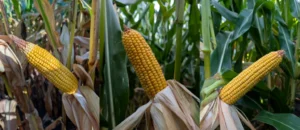
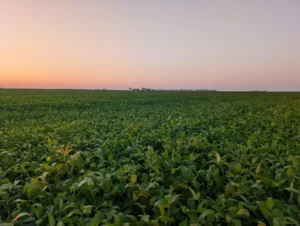
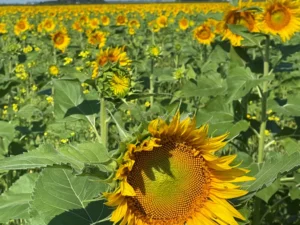
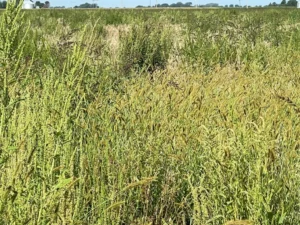
Entering September an intense shift in weather as a “heat dome” became established in Northeast Illinois. While fields near the Wisconsin state line received precipitation, most areas did not. The ninety degrees plus days provided ample Growing Degree Days (GDDs) for crops finishing grain fill. On lighter soils the temperatures are causing a water deficit reflected by the wilting/yellowing plants. As mentioned in previous reports, there is very good corn, and not as good, depending on where you collect samples. This week I collected from fields that should be very high yielding. Few things are left to surprise me in this growing season, but a sunflower field in Kendall County did just that! Not sure when the field was planted and harvest plans for the crop, but an interesting rotation option. Several winter wheat fields that had been harvested earlier in the season are now supporting a robust weed population, farmers should consider mowing, tillage or a chemical option to prevent these weeds from adding to the weed seed bank. For those considering a third or fourth cutting of alfalfa an oft asked question is when? Adequate time is needed for regrowth of alfalfa to replenish root carbohydrates to increase overwintering ability of the perennial crop. Our general answer has been four to six weeks before a killing frost for the hay crop. Newer recommendations encourage farmers to look at GDDs, with a minimum of 500 GDDs between last cutting and a killing frost.
Doug Gucker – Local Food Systems and Small Farms Educator
Dewitt, Macon, and Piatt County
Soil Conditions: Mildly Dry (soil is drier than normal, plant growth may have slowed)
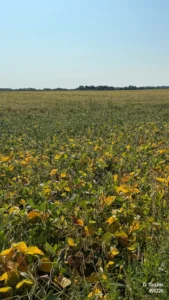
Early-maturity soybean fields are turning yellow and shedding leaves as they approach the R8 (Full Maturity) stage. Most soybean fields are just beginning to show a little yellow.
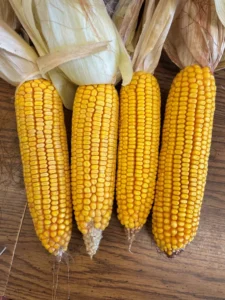
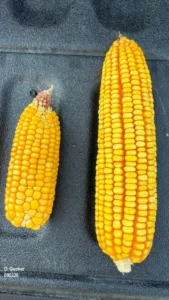
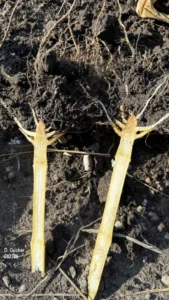
Corn harvest has just started, with a few farmers taking out end rows and taking advantage of local elevators offering reduced drying charges for corn at moisture levels under 30%. Corn root and lower stalk samples from fields with lodging issues were submitted to the U of I Plant Clinic and were diagnosed with both Rhizoctonia crown and stem rot, and Pythium crown and/or root rot. Corn ears are varying quite a bit in size within fields.
Talon Becker – Commercial Agriculture Specialist
Vermilion County
Soil Conditions: Near Normal
After a week of some welcomed dryer weather, and perhaps less welcome heat, the crop in southern Vermilion County is progressing quickly towards maturity.
Most soybean fields in that part of the county were somewhere in the full seed (R6) growth stage, with a couple fields starting to drop leaves and close in on beginning maturity (R7). Some pockets with disease issues could be found and are relatively easy to spot at this point in the season, as they tend to be a bit stunted and yellowing/dropping leaves faster than surrounding areas. But for the most part, most fields are relatively clean of disease as they near maturity.
Most corn fields are somewhere in the dent (R5) stage. I did not find any kernels at black layer in the fields I surveyed, but there were at least a couple fields that were very close. As these fields senesce, more foliar disease can be seen in the canopy as well. Even if it won’t impact this year’s management decisions, now is a good time to scout your fields to determine how well your disease management plan worked this year. Over time, these observations can help you determine which diseases may be more prevalent in certain fields as well as help you determine the influence of genetic resistance in your chosen hybrids to different diseases. Another reason to scout now is to asses the levels of stalk rot and lodging in your fields. I found a couple fields during my survey with some localized lodging due to crown and stalk rots. The use of drones or recent satellite imagery, if you have access, may help to assess extent and severity of lodging and help with prioritization of harvest activities.