Illinois Crop Update | August 14, 2026
Russ Higgins – Commercial Agriculture Educator
Grundy County
Soil Conditions: Moderately Wet (soil is damp, standing water may be present in low areas, water bodies are full)
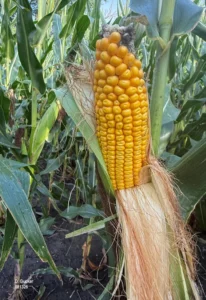
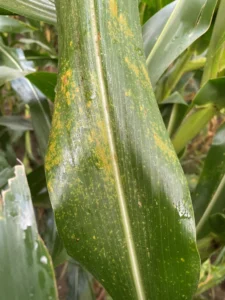
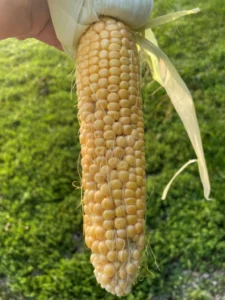
A very active weather pattern across northeast Illinois that spawned tornados, a derecho, and significant rainfall and flooding across the region. In corn fields, foliar leaf diseases are now more easily detected, including Southern rust. A Southern rust report was received by Dr. Boris Cameletti, University of Illinois Plant Pathologist on July 23rd in Williamson County in southern Illinois. While the presence of the disease in not good news for northeast Illinois cornfields, the fact that it has appeared later in the season when compared to recent years is good news. With much of the corn crop now at R4 or dough stage, the benefit of a fungicide application, unless exhibiting severe pressure, is low. By comparison, in Grundy County Southern rust made it appearance by mid-July in 2024 and 2025. R4 is one of the shortest reproductive stages in corn plant development before reaching R5 or Dent stage. In fields where scouting has included the pulling of ears, we are finding along with neighboring states, incomplete or scattered kernel set on some ears. Suggested causes include temperature and moisture extremes during pollination, lack of wind during pollen shed, and hybrid characteristics. We are encouraging growers to check variations or responses between hybrids. Yesterday Dr. Conner Sible and Steve Brand from the University of Illinois visited with local producers as guests of the Kendall-Grundy Farm Bureau and local Illinois Extension offices in Kendall County and shared their growing season observations along with nutrient use and crop genetic (root structure) interactions.
Talon Becker – Commercial Agriculture Specialist
McLean County
Soil Conditions: Mildly Wet (soil is wetter than normal, local vegetation is healthy)
As of Wednesday (8/12) afternoon, the crop in southern McLean County was still standing and, for the most part, looking healthy following the storm system that moved through a couple hours prior to my survey. As I write this the following day, another strong storm system is moving through the region bringing more heavy rain and high winds, so I am uncertain if that has changed the crop conditions in that part of the county.
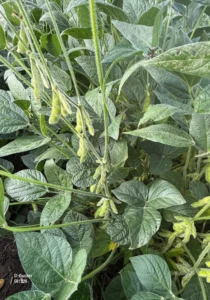
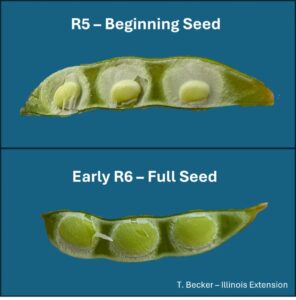
Soybeans in southern McLean County are primarily in the beginning seed (R5) growth stage, ranging from full pod (R4) to early full seed (R6), and are still relatively free of disease or insect issues. Corn is reaching late dough (R4) and early dent growth stages (R5). Remobilization of nutrients from lower leaves is starting to pick up pace in some corn fields that are a bit closer to maturity or in areas of fields affected by early-season wet conditions. Diseases, such as gray leaf spot and Physoderma brown spot, were present in a few of the fields visited, but still no sign of tar spot or southern rust in the fields surveyed. Both have been identified in neighboring counties, Livingston for tar spot and Champaign for southern rust. So, it is possible that those diseases are in the McLean County, but still at low levels. Counties where tar spot and southern rust have been identified can be seen on Crop Lookout from the Crop Protection Network. Links to that resource as well as more information about managing these diseases can be found in the following articles from Extension Field Crop Pathologist, Dr. Boris Camiletti.
Southern rust – https://farmdoc.illinois.edu/field-crop-production/first-southern-rust-report-of-2026-in-illinois-what-corn-growers-should-know.html
To report either of these diseases in your area, email photos directly to Dr. Camiletti at bxc@illinois.edu and/or submit samples to the Plant Clinic (https://extension.illinois.edu/plant-clinic).
Doug Gucker – Commercial Agriculture Educator
Dewitt, Macon, and Piatt County
Soil Conditions: Mildly Dry (soil is drier than normal, plant growth may have slowed)
The majority of the corn and soybean fields are in good to excellent shape. The exceptions are those fields that have suffered some type of weather issue – flooding, storm, or wind damage.
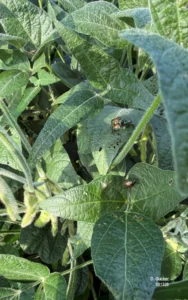
Soybean fields are mostly at the R5 stage, with some at the R6 (full seed) stage. I am noticing Japanese beetle feeding, but at levels below treatment thresholds. Also beginning to see bean leaf beetles showing up in the fields.
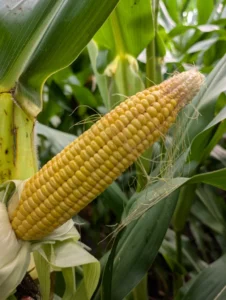
Corn fields are mostly in the R4 or R5 stage, dough to dent, but do see the occasional corn field in the R1, Silk stage. Corn leaves are showing minor leaf diseases currently, mostly a little gray leaf spot.