Illinois Crop Update | August 28, 2026
Steve Brand – Commercial Agriculture Specialist
DeKalb County
Soil Conditions: Mildly Dry (soil is drier than normal, plant growth may have slowed)
We have caught a very nice break from severe weather and storms, with some pleasant temperatures to boot, as we begin to enter the home stretch of the growing season. Corn fields across northern Illinois are starting to fire, while soybean fields continue to stay green and produce large pods and seeds.
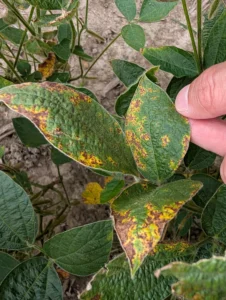
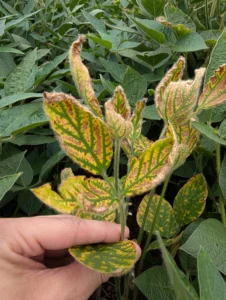
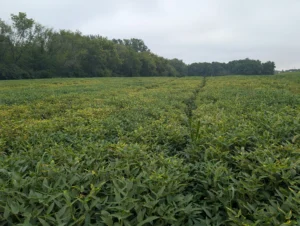
Disease is starting to show up in soybeans. Sudden death syndrome (SDS) as well as Septoria leaf spot are the two main diseases I have seen. I have not seen white mold and have only heard of a few fields so far with red crown rot (a disease that has nearly identical foliar symptoms to SDS). The fields affected by the listed diseases will defoliate quickly, and cap podfill overall. Soybean fields as a whole have looked great this year, and high yields should be expected if what I have scouted is any indicator.
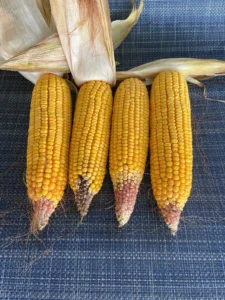
Corn continues to move towards black layer and physiological maturity. Disease instances remain low even as we approach September. Tip back is something to be monitored closely, as many fields were going through pollination during a heat dome, dealt with wildfire smoke, and week-long overcast conditions. A dry and hot September may accelerate dry down as well. More updates to come next week!
Russ Higgins – Commercial Agriculture Educator
Grundy County
Soil Conditions: Near Normal
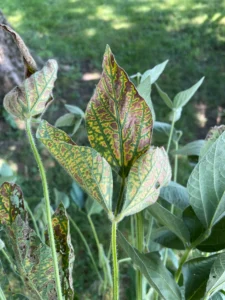
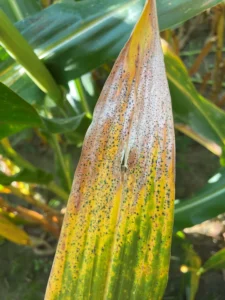
Black layer is near for some corn fields in the Northeast region. Utilizing the U2U Decision Support Tool – Corn GDD suggests a 108-day hybrid planted April 25th in Grundy County will reach black layer between September 1st and the 6th. In corn fields scouted, especially those that did not receive a fungicide application, foliar leaf diseases continue to hasten leaf area necrosis and yellowing of plants. This is going to be a challenging year for accurate corn yield prediction from the perspective of in-field variation. Growers are encouraged to sample multiple locations within the field, accounting for pollination differences in ears to more accurately assess predicted yield. Some soy fields are starting to show very limited disease symptoms including Sudden Death Syndrome. This fungal pathogen can survive the winter in both corn and soy residue. Infection takes place early in the growing season, enhanced by cool and wet soil conditions. The visible symptoms we see are the result of a toxin produced by the disease that is translocated to upper canopy leaves. There are several other diseases including Red Crown Rot and Brown Stem Rot that exhibit similar leaf symptoms.
Talon Becker – Commercial Agriculture Specialist
Ford County
Soil Conditions: Moderately Wet (soil is damp, standing water may be present in low areas, water bodies are full)
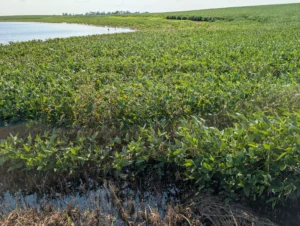
I visited Ford County this week, and like Champaign County, flooded conditions have returned to areas affected earlier this growing season. The flooding seemed to be a bit worse in the southern part of the county and improved as I traveled north, which is consistent with total precipitation estimates from MRCC and rain gauge data from ISWS and CoCoRaHS from the past couple of weeks. To some extent, the flooded areas are already absent of a crop due to early-season flooding. But in a number of fields I stopped at, the current flooding extended into previously healthy crop. That crop is now either dead or has signs of stress, disease, and early senescence, leading to incomplete grain fill, low seed weights, and potential grain quality issues.
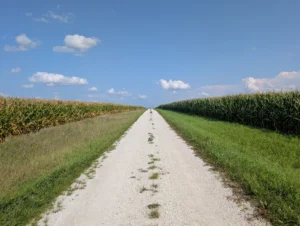
In fields or areas not affected by the flooding, soybeans are at or near full seed (R6). Soybean canopies, for the most part, were still relatively clean of disease, but a minority of fields do have some disease symptoms starting to show in patches. Disease symptoms were a bit more prevalent in corn fields visited, primarily gray leaf spot and northern corn leaf blight, but severity was still relatively low, overall. Corn was generally somewhere in the dent (R5) growth stage, getting close to black layer in a handful of fields.
Doug Gucker – Local Food Systems and Small Farms Educator
Dewitt, Macon, and Piatt County
Soil Conditions: Near Normal
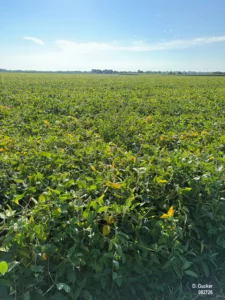
Earlier-planted soybean fields are beginning to turn color, signaling the Beginning Maturity (R7) stage. Other soybean fields are mostly in the Full Seed, R6 stage, and no longer blooming.
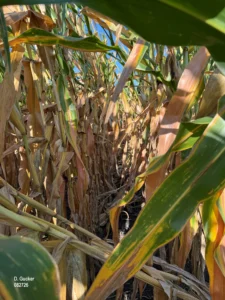
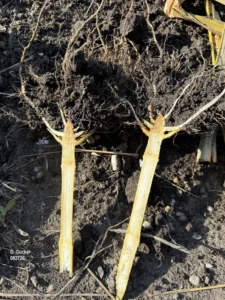
Earlier-planted corn fields are looking ugly with areas of the fields showing severe N-deficiency symptoms and dead plants, which is indicative of a root or stalk disease issue. Corn crown rot is suspected to be the cause in some of the fields. I currently have several corn plant roots and lower stalks being analyzed at the U of I Plant Clinic in the hope of determining the cause or causes. Local farmers are preparing for a challenging beginning to their corn harvest in the area.