Illinois Crop Update | June 12, 2026
Kathryn Seebruck – Commercial Agriculture Educator
Stephenson County
Soil Conditions: Mildly Wet (soil is wetter than normal, local vegetation is healthy)
Although the entire month of May saw just under an inch of rain in total, the beginning of June has brought some relief with over two inches of rain deposited thus far with more on the way (based on data from the Water and Atmospheric Resources Monitoring Program Freeport station – your mileage may vary!).
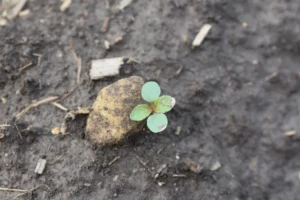
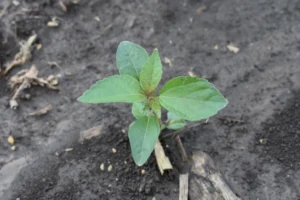
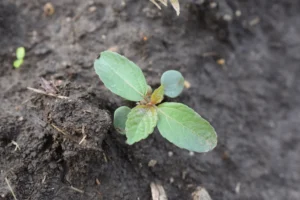
Stephenson County is the home of the first reported population of Asian copperleaf in Illinois (https://extension.illinois.edu/news-releases/novel-illinois-weed-species-asian-copperleaf-identified-northern-illinois). Although originally thought to be a late emerging weed typically not noticed until after harvest, seedlings have already been emerging over the last couple of weeks. When scouting prior to making post emergence herbicide applications, keep an eye out for Asian copperleaf. For help with identification, see the attached photos as well as the Asian copperleaf fact sheet from Illinois Extension.
If you suspect you have Asian copperleaf, please contact Kathryn Seebruck at 815-986-4357 or seebruck@illinois.edu. Reports can also be made at https://www.eddmaps.org/.
Reagan Tibbs – Commercial Agriculture Educator
Logan County
Soil Conditions: Moderately Wet (soil is damp, standing water may be present in low areas, water bodies are full)
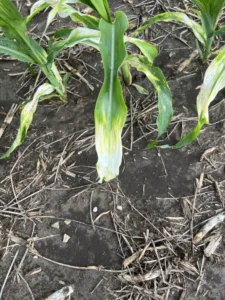
After a week of high temperatures and little rainfall, Wednesday (6/10) storms brought over an inch of rain to many parts of the County. This will be followed by another round of storms on 6/11. Despite the heavy winds and tornado reports from the 6/10 storms, there does not appear to be much wind damage to crops in much of the County.
Talon Becker – Commercial Agriculture Specialist
Vermilion County
Soil Conditions: Moderately Wet (soil is damp, standing water may be present in low areas, water bodies are full)
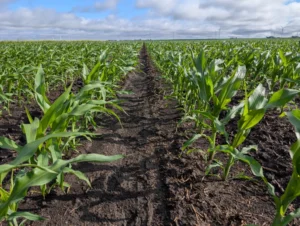
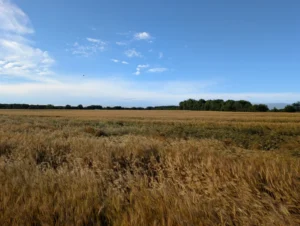
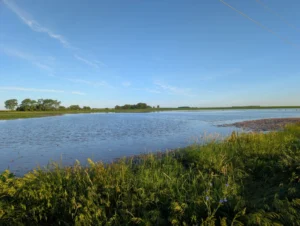
After a wet past four days in east central IL (2-3 inches so far in most areas), many fields in northern Vermilion County have standing water as of my survey on Thursday morning. For most fields, this is isolated to small, low-lying areas and field edges. But in pockets of that part of the county, there are fields with relatively large areas underwater, at times with the young crop fully submerged. With more rain in the forecast over the next few days, it may be some time before those areas fully drain. As for crop progress, most corn was somewhere in the V4-V8 range, and most soybeans were V1-V3. The five wheat fields I found were all in the dough stage of kernel development (Feekes 11.2), and some minimal lodging could be seen along field edges and in low areas in a couple of those fields.